
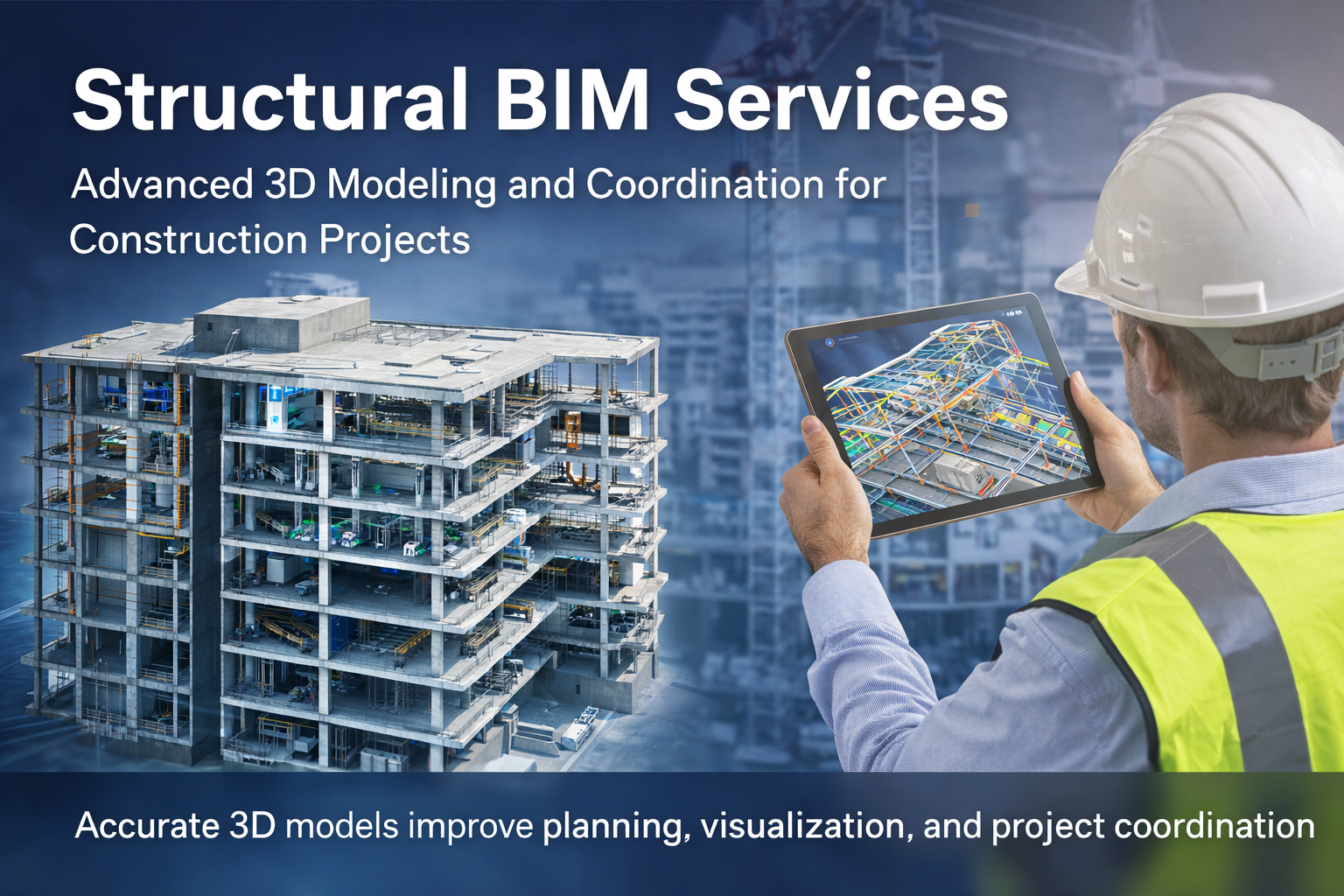
Modern construction projects require precise planning, collaboration, and data-driven decision making. Structural BIM services help engineers, architects, and contractors create intelligent 3D building models that improve design accuracy, coordination, and project efficiency.
Building Information Modeling (BIM) allows teams to visualize structural elements such as beams, columns, slabs, and foundations before construction begins. With advanced modeling tools, project stakeholders can detect design conflicts early, reduce costly errors, and streamline project execution.
Companies offering professional Structural BIM modeling services help construction teams develop detailed digital models that improve coordination between structural, architectural, and MEP systems.
Revit Structural BIM Services for Modern Construction Projects
Many engineering firms rely on Revit structural BIM services to create highly detailed and coordinated structural models. Autodesk Revit allows engineers to design, analyze, and document building structures with accuracy and efficiency.
Using Revit-based BIM workflows provides several advantages:
• Intelligent 3D modeling of structural components
• Improved collaboration between project teams
• Accurate quantity takeoffs and material estimation
• Faster generation of construction documentation
• Early clash detection with architectural and MEP models
These benefits help construction companies reduce project delays and avoid expensive on-site design modifications.
Revit also supports parametric modeling, which allows structural engineers to make design changes quickly while maintaining consistency throughout the model.
Structural BIM Modeling Services for Coordinated Design
Professional Structural BIM modeling services focus on developing detailed 3D models that represent all structural elements of a building. These models help engineers validate designs and ensure structural integrity before construction begins.
Typical components modeled in BIM include:
• RCC structural elements
• Steel structural frameworks
• Reinforcement detailing
• Structural connections
• Foundations and slabs
High-quality BIM models are usually developed with different Level of Development (LOD) standards such as LOD 300, LOD 350, or LOD 400 depending on project requirements.
Accurate structural models help construction teams avoid miscommunication between architects, structural engineers, and MEP consultants.
Structural Shop Drawings and Construction Documentation
Shop drawings play an important role in the construction process. These drawings provide detailed fabrication and installation information for structural components.
BIM-generated shop drawings provide several benefits:
• Precise reinforcement detailing
• Accurate beam and column layouts
• Structural fabrication drawings
• Clear construction documentation
• Reduced manual drafting errors
Because these drawings are directly generated from BIM models, they maintain consistency with the structural design and reduce the chances of mistakes during construction.
Structural BIM Coordination and Clash Detection
One of the biggest advantages of BIM technology is clash detection. During the design phase, BIM models allow teams to detect conflicts between structural, architectural, and MEP systems.
Clash detection helps identify issues such as:
• Structural beams interfering with ductwork
• Pipe routes conflicting with columns
• Insufficient ceiling clearance
• Equipment installation conflicts
By resolving these issues during the design phase, companies can prevent costly delays during construction.
Advanced structural bim services improve project coordination and help construction teams complete projects more efficiently.
Structural BIM Quantity Take-Off and Cost Estimation
BIM models also help generate accurate quantity take-offs and cost estimates. Because the model contains detailed information about structural components, engineers can quickly calculate material quantities.
This improves:
• Cost estimation accuracy
• Project budgeting
• Material planning
• Procurement efficiency
Construction firms that use BIM-based quantity take-offs can significantly reduce waste and optimize material usage.
Industries That Use Structural BIM Services
Structural BIM services are widely used across many industries including:
• Residential construction
• Commercial buildings
• Industrial facilities
• Hospitals and healthcare infrastructure
• Airports and transportation projects
• High-rise building construction
Large infrastructure projects especially benefit from BIM because they involve complex structural coordination.
Why Choose Professional BIM Experts
Outsourcing BIM modeling to experienced professionals allows construction companies to focus on project execution while experts handle the modeling and documentation process.
Key advantages include:
• Faster project design workflows
• Reduced design errors
• Improved construction coordination
• High accuracy in documentation
• Better project visualization
With advanced BIM tools and experienced engineers, construction companies can significantly improve project outcomes.
Conclusion
The construction industry is rapidly adopting digital technologies to improve efficiency and reduce project risks. Professional Revit structural BIM services allow engineers and contractors to create highly detailed 3D models that improve coordination and construction planning.
Advanced Structural BIM modeling services help teams visualize building structures, detect design conflicts, and generate accurate construction documentation. These services play a crucial role in improving project efficiency, reducing errors, and ensuring successful project delivery.
Organizations looking for reliable structural bim services can benefit from experienced BIM professionals who understand modern construction workflows and deliver high-quality models tailored to project requirements.
No comment